Get Paid to Play Games — How It Actually Works in 2026

Most “get paid to play games” results are survey apps in a gaming costume. But there are five legitimate paths — gameplay data rewards, playtesting, content, competition and coaching. Here's the honest map of what each pays, what it demands, and the warning signs of a scam.
“Get paid to play games” is one of the most oversold phrases on the internet. Most results are survey apps wearing a gaming costume, and the payouts are measured in cents per hour. But there are legitimate ways to earn from gaming — they just look different from the ads. Here's the honest map: what each path pays, what it demands, and how to start.
The Five Real Paths
1. Gameplay Data Rewards — Lowest Effort, Smallest Ceiling
Some platforms pay you for recordings of your gameplay, which studios and researchers use to understand how games are actually played. The appeal is that it's passive: you were going to play anyway, and the recording runs in the background.
The Shard Program is the version we run, and here are the real numbers rather than a vague promise: 2,000 Shards = $1 USD, the redemption minimum is a $5 gift card, there are 100+ gift card options across 150+ regions (Visa, Steam, Amazon, Riot and others), and $100,000+ has been paid out to players so far. Earnings depend on demand — titles with active bounties and fewer recordings pay more, up to around $5 per hour, while heavily-recorded games like Valorant pay a lower baseline. It's Windows-only, 18+, and recordings are anonymized before they leave your PC.
Realistic expectation: gift-card money, not rent. What makes it worth doing is that the effort is genuinely near zero.
{{button}}
2. Playtesting — Real Hourly Pay, Irregular Work
Studios and research firms pay testers to play unreleased builds and give structured feedback. Rates are typically hourly and meaningfully better than reward apps, but sessions are sporadic and you're competing for slots. Look for studio-run programs, university game labs, and established user-research panels.
Realistic expectation: decent per-session pay, unpredictable volume. Treat it as occasional income.
3. Content Creation — Highest Ceiling, Slowest Ramp
Streaming and short-form clips pay through ads, subscriptions, sponsorships and affiliate links. The ceiling is enormous and the floor is zero; most channels earn nothing for a long time. The players who break through usually do it by shipping consistently — which is a clipping problem before it's a talent problem.
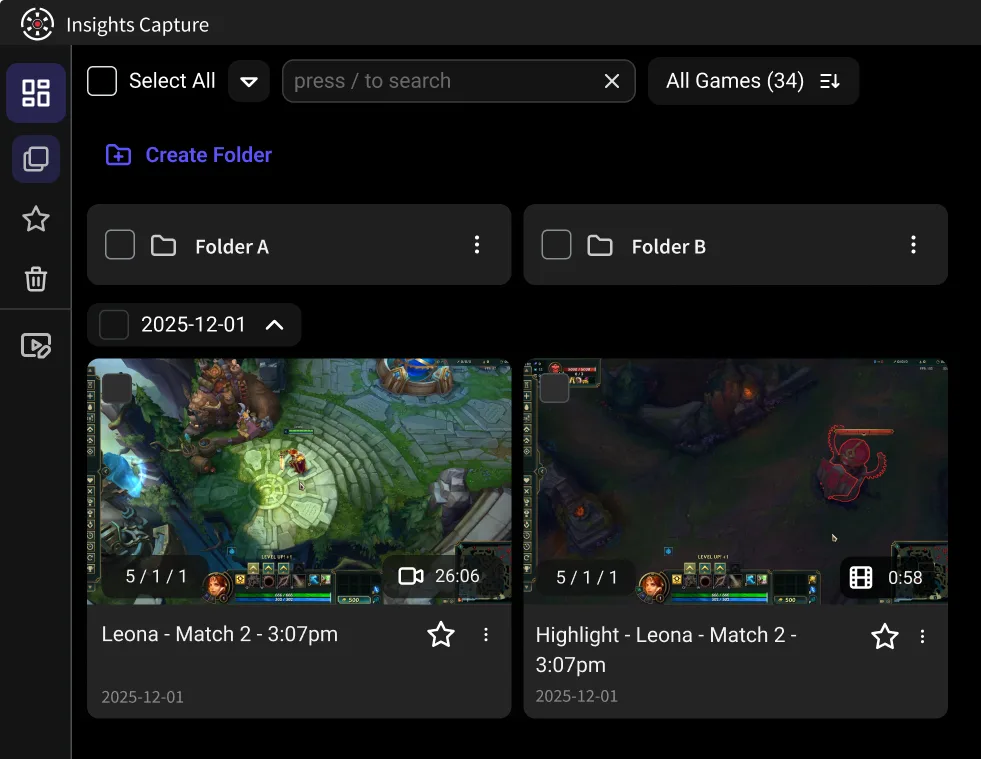
If you're going this route, the practical foundation is capturing everything so you always have something to post. Insights Capture records automatically and marks your kills and wins, so a night of play becomes a queue of ready clips instead of footage you have to hunt through.
Realistic expectation: months before meaningful money, but the only path here with real upside.
4. Competitive Play and Tournaments — Skill-Gated
Prize pools exist at every level, from local brackets and community cups to major circuits. Entry-level tournaments are genuinely accessible; the pay only becomes serious near the top.
The players who climb fastest review their own footage. That's the whole idea behind VOD review — watching your own mistakes with timestamped notes is how coaching works when you can't afford a coach.
Realistic expectation: small local winnings early; real money requires real ranking.
5. Coaching and Services — Steady, if You're Good
If you're high-ranked, people will pay for coaching, and rates are respectable per hour. It requires proof of rank and the patience to teach.
Realistic expectation: the most reliable “real income” option for strong players.
What to Avoid
The space is full of traps, and they share tells:
- Pay-to-play-to-earn. If you must deposit money, buy an NFT, or purchase a “starter pack” before earning, walk away.
- Survey apps in gaming clothes. If most tasks are surveys and offers rather than playing, the “games” are marketing.
- Vague payout math. Legitimate programs state conversion rates, minimums, and payout methods plainly. If you can't find how much a point is worth, that's the answer.
- Withdrawal walls. High minimums you can never reach are a business model, not an accident.
- Personal data grabs. Understand what's collected. For the record: Shard recordings are anonymized before upload, with personal information stripped.
How to Actually Start This Week
- Turn on passive earning first — it costs you nothing. Install a rewards-enabled recorder, join the program, play as usual, and check your balance in a week. Start with the Shard Program.
- Apply to two playtesting panels — studio programs and research panels, not offer-wall sites.
- Post one clip a day for a month if content is your goal. Automatic capture makes this achievable; manual clipping is where most people quit.
- Enter one small tournament in your main game to see where you actually stand.
FAQs: Getting Paid to Play Games
1. Can you really get paid to play video games?
Yes, but the honest version is less glamorous than the ads: gameplay-data rewards and playtesting pay small-to-moderate amounts reliably, while content and competition have big ceilings and slow starts.
2. How much can you make from gameplay rewards?
With Shard, rates vary by game demand — up to about $5 per hour on high-bounty, less-recorded titles, and less on saturated games. Redemption starts at a $5 gift card, with 2,000 Shards converting to $1.
3. Do I need a good PC?
For rewards recording, a modern Windows PC that runs your games is enough — Insights Capture is built for low overhead and won't cost you frames.
4. Is getting paid to play games a scam?
The category has plenty of scams, but not everything in it is one. Judge by transparency: published conversion rates, reachable minimums, clear data handling, and no upfront payment.
5. What's the fastest way to start earning?
Gameplay-data rewards, because there's nothing to build or apply for — install, join, play.
Final Thoughts
The realistic answer is that gaming pays in layers: a small passive base from recording, occasional playtest sessions, and whatever you build on top through content or competition. The base layer is the one you can start today, and it's the only one that pays you for the games you were already going to play. Start with the Shard Program — and see our roundup of games that pay real money for what's legit and what isn't. Contact us now!